
Wall Street Journal Highlights GTP’s Role in Expanding Educational Opportunity
The Wall Street Journal’s September 29th edition highlighted the Global Teaching Project’s work in Mississippi, and affirmed the relevance of GTP’s efforts to the national dialogue on how to best expand educational opportunity.
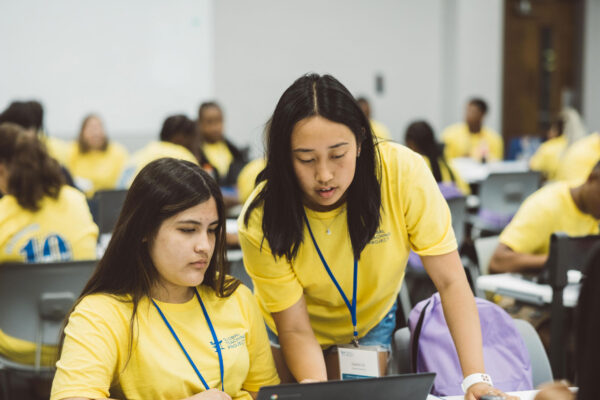
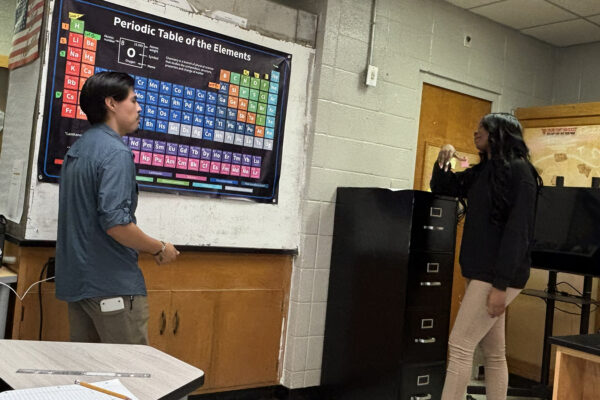
The Wall Street Journal’s Tuesday print and online editions led the Letters to the Editor section with commentary from Matt Dolan, GTP’s founder and CEO. That letter discusses GTP’s achievements working with students in rural, high-poverty communities, and addresses how GTP’s Advanced STEM Access Program provides a template for education reforms nationally by addressing concerns specific to rural communities.
The letter also comments upon an op-ed by Harvard economist Roland Fryer that analyzes various educational reforms, and assesses which reforms presented by Dr. Fryer may be adapted to benefit rural students, and which may not.
The full text of the letter as published in The Wall Street Journal is below:
Regarding Roland Fryer’s op-ed (“The Education of Nikole Hannah-Jones,” Sept. 24): For the past decade, we have worked to provide promising public high-school students in rural, high-poverty Mississippi communities access to advanced STEM courses that their schools otherwise could not offer—due to a chronic, and worsening, shortage of capable teachers. I support the premises of school choice and endorse the policy prescriptions favored by Mr. Fryer that have proven salvific in cities such as Houston and Denver.
But those remedies have limited applicability to the more than 1 in 5 students who attend rural schools. Replacing “nearly half the teachers” is simply not an option in schools that struggle to find teachers in the first place—two of the high schools we serve didn’t have a single math teacher in recent months. Nor is it possible to set up competition among schools in lightly populated counties that have neither the students nor the resources to sustain multiple schools.
The good news is that there is no shortage of talented students in rural areas, and a template exists to help those students succeed within existing public schools. We have achieved strong results in some of the nation’s most impoverished communities by adapting certain elements Mr. Fryer notes have been effective in more populous areas—tutoring, teacher training and high expectations—while introducing others adapted to the social dynamics and logistical concerns of rural areas.
As Mr. Fryer suggests, the “choice” that is the proper focus isn’t between public and private schools, but between quality and poor education. The key task is to promote the former for all students, wherever they live, and in whatever schools are available to them.
Matthew J. Dolan
CEO, Global Teaching Project

You may also like
On the road with GTP: 10+ schools in three days!